Green Eyes and the Algorithm
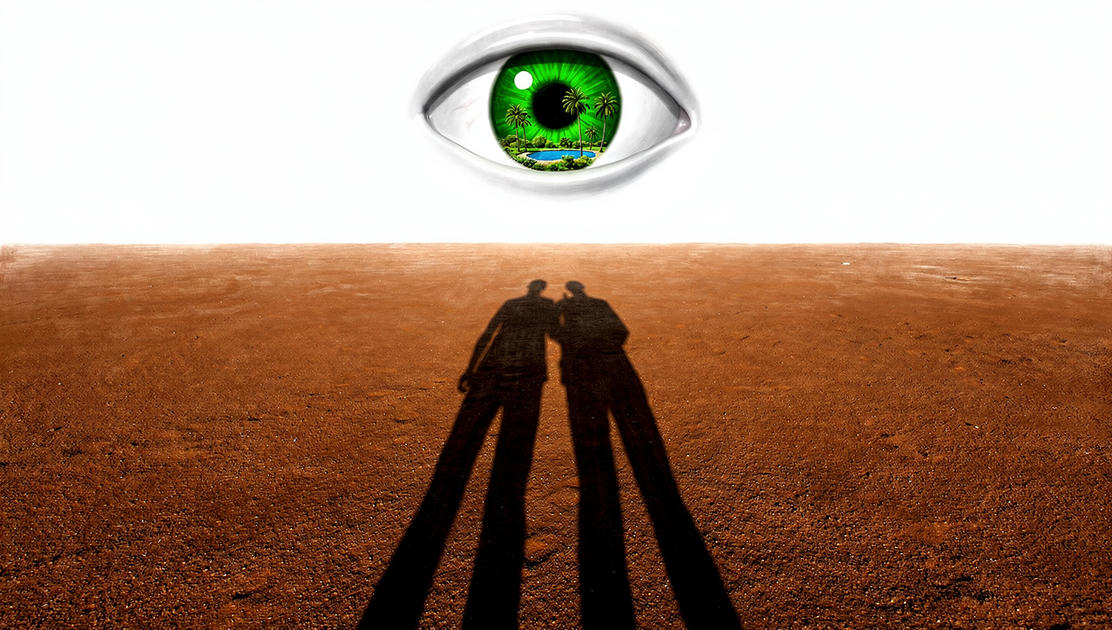
I have green eyes. I also have envy, which feels on-brand.
A few weeks ago, I spent hours researching an emerging phenomenon in AI, documented what was actually happening, and connected it to larger patterns in how we're building these systems. The post did okay. Not great, but okay.
Then someone else covered the same topic. Bold claims, definitive statements, zero supporting evidence. It blew up. Tons of comments. Tons of reactions.
Hours of research versus minutes of assertion. The assertion won.
My first reaction was positive. Oh cool, someone else noticed this. Then I saw the engagement numbers. Then I read the post itself. And then I felt it: that tight, hot sensation in my chest that I know too well.
This is not fair.
What Makes Something Clickbait
I've been thinking about what specifically made that post perform better than mine. The answer is pretty simple: bold, definitive claims without any supporting evidence.
That's my working definition of clickbait. It's not about hooks or formatting or emoji usage. It's about making strong assertions that trigger people's desire to either agree loudly or argue back. When you write something well-reasoned with evidence, you've already handled the knee-jerk objections. There's nothing easy to push back on. If someone wanted to disagree substantively, they'd have to do their own research first.
Nobody does that. They just scroll past.
LinkedIn claims their algorithm now rewards "depth and authority" over clickbait hooks. My feed is chock-full of posts like "5 Tips for .NET Programmers" where three of the tips are wrong. Those posts get massive engagement because people show up to argue. Every comment, even the corrections, feeds the algorithm.
I don't play that game. When I see bad advice getting traction, I don't comment to correct it. Why would I elevate content I think is harmful? But that restraint costs me. The algorithm rewards controversy, not quality.
Maybe LinkedIn's marketing team believes their own messaging. Maybe "depth and authority" is something they're genuinely trying to optimize for. But the evidence in my feed suggests otherwise. They're a business. I don't pay them. I'm not looking for a job. Why would they prioritize showing my content over someone who's playing the engagement game more effectively?
The Monstrous Double
Here's where it gets uncomfortable.
René Girard wrote about mimetic rivalry, this pattern where we unconsciously adopt the desires of people around us. We want what others want, not because the object is inherently valuable, but because they want it. As the rivalry intensifies, the rivals become "monstrous doubles" of each other. The original object of desire fades into irrelevance. What remains is the competition itself.
I catch myself doing this constantly.
The object of my desire isn't engagement. It's putting out good content, building a body of work I can be proud of, creating something substantive that people can actually learn from. But there's this secondary desire: getting engagement as proof that the work is making an impact. Those two desires compete. And according to Girard, as rivalry intensifies, the desires get subsumed into the mirroring. You stop caring about the original goal and start caring about beating the other person.
Have I started studying what performs well and adjusting my approach? Yes. Have I thought about how to make my content more accessible, more palatable, more algorithm-friendly? Constantly. That's the monstrous double at work. The more I focus on why that guy's post outperformed mine, the more I risk becoming exactly what I'm criticizing.
The Carousel Experiment
I tried to play the game. Gemini told me LinkedIn rewards carousels over hero images because carousels get people to linger longer on posts, which signals the algorithm to increase reach. So I built a feature into my blogging tool that takes a post and turns it into a carousel with AI-generated images, each slide distilling a key point.
It didn't work. If anything, engagement went down.
Maybe the algorithm doesn't know how to classify me. My content isn't pure technology, and it isn't pure philosophy. I write about how work is spiritual formation. I connect the patristic concept of acedia to why you can spend twenty minutes scrolling Netflix unable to pick something to watch. I draw lines between latent space representations and virtue ethics. That's not exactly "10 Productivity Hacks for Software Engineers."
Or maybe I'm just making excuses. Maybe my content isn't as deep as I think it is. Maybe I'm not as authoritative as I imagine. That's the thing about envy: it's hard to separate legitimate grievance from wounded ego.
The Mountain
Last August I climbed Mount Comanche in Colorado with a group of men from my church. It was a spiritual formation thing. No phones. No feeds. No engagement metrics. Just presence, effort, and the slow work of putting one foot in front of the other.
A lot of guys came down from that mountain with clarity about what they'd left up there or what they were taking home. I didn't have that flash of insight. I just had a vague sense that I was supposed to be doing more than grinding out projects and managing my daily life.
On the mountain, there was no algorithm deciding whether my effort was worth amplifying. There was just the work and the summit. The value wasn't determined by how many people witnessed it. The value was in the doing.
Over the following months, talking with friends and colleagues, a pattern emerged. People kept telling me I have a way of explaining things, that I think about problems in interesting ways, that maybe I should do something with that. So I started building the blogging tool. Then I started writing.
Coming back to the digital world was a conscious choice. I knew what I was returning to. The feed is the opposite of the mountain. On the mountain, presence is the point. On the feed, presence is just another input to an optimization function that doesn't care about substance.
The Risk
Here's what I'm finally naming: by obsessing over the clickbait guy, I'm allowing him to set the terms of my existence.
Every time I check whether his post is still outperforming mine, I'm ceding ground. Every time I adjust my format or my hooks or my posting schedule based on what worked for someone else, I'm becoming a little more like the thing I'm criticizing. The monstrous double isn't a dramatic transformation. It's a slow drift. You wake up one day and realize you've been optimizing for someone else's definition of success.
Girard understood that the rivalry eventually consumes the original desire entirely. The object disappears. All that's left is the mirror. And the person staring back at you isn't someone you recognize.
Intentional Invisibility
I had an epiphany a few days ago, somewhere between being annoyed at that other post and sitting down to write this one.
If the algorithm doesn't see me, but the work is substantive and good, then the algorithm's failure is actually my liberation.
I'm not settling for low engagement. I'm opting out of a race that requires me to become a caricature of myself to win. The platform's architectural incentives are actively stripping the human out of human-computer interaction. Every optimization trick, every engagement hack, every carousel format chosen because the algorithm rewards dwell time: these are small surrenders. They're trades where you give up a piece of your voice in exchange for a few more impressions.
The return on that trade is terrible.
I'm going to keep posting. Some posts will have hero images, some will have carousels. I'm not going to stress about which format the algorithm prefers this week. The amount of effort I'm putting in is producing a good effect even with low engagement: I'm building a body of work I'm proud of. I'm thinking through ideas that matter to me. I'm getting better at articulating complex connections between faith and technology and human nature.
If LinkedIn doesn't show my content to anyone, that's not something I can control. And increasingly, that's not something I want to control. The effort to control it is the trap.
The Post About the Algorithm
I'm curious what LinkedIn thinks about this post. It's probably not going to get good engagement. It's too meta, too philosophical, too far outside the neat categories that drive easy interaction.
The envy will come back. It always does. The guy with the clickbait post will keep getting more reach than me.
But I climbed a mountain last August, and the summit didn't care how many people saw me reach it. The work was the point. The presence was the point.
I'm choosing to bring that back down into the feed. If the algorithm can't see the value in that, the algorithm is the one who's blind.
I have green eyes. I'm used to it.