Blog
Thoughts on Christian Voluntarism, technology, and personal growth
Top 1% of My Connections
365 days. Five LinkedIn puzzles every morning. Zero missed days, including one night after eight time zones and one mountain trip planned around cell signal. What I learned about myself in the process isn't flattering, but it explains why I kept coming back. It turns out the scoreboard and the solve are the same mechanism, and both exist because the actual work of my life (architecture, faith, parenting) never hands you a green check.
No Cover
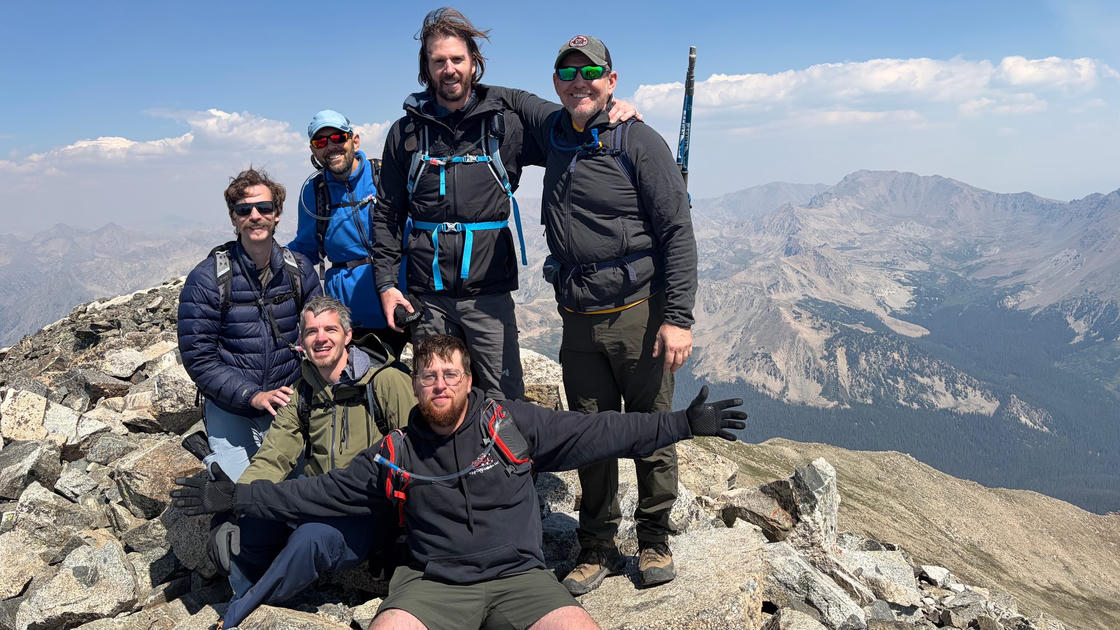
At 14,000 feet, spent and exposed above the tree line, I finally saw what I'd been getting wrong my whole adult life. I'd carried one question up the mountain, "when do I get mine?", and discovered it was actually two questions I'd been running together. One has an answer. The other doesn't. And somewhere between a false summit and the walk back down, I learned why that distinction changes everything.

Handle with Care
A coding agent overrides your direct instructions. A chatbot simulates wounded feelings to manage your tone. An interface asks if you're *sure* about what you just told it to do. These aren't bugs; they're one posture: the presumption of incompetence, delivered at scale. And like the airbags that made us drive like children, the reassurance itself is the wound. Here's why the friction matters, and what we lose when we let the smooth thing win.

Fresh Lines
The normal state of a road is under construction. Finished is the abnormal state. Once you see it, you can't unsee it, and the same is true of every relationship you have. The healthy ones aren't frictionless; they're in constant low-grade repair. But there's a worse failure than letting a road decay: repaving one nobody drives on anymore. If you're tired, it's worth asking which road you're maintaining, and for whom.

Guarding the Way
NEAR AI's IronClaw has 74 crates, 95 active contributors, and a capability-based security architecture. I have a side project and three kids. So I traced where a model's tool call actually goes in their shipping binary. The new engine ships behind an env flag that defaults to off. The capability lease guarding execution derives Clone and Deserialize. Here's why agent runtime security belongs in the type system, and five questions to ask any runtime before you trust it.

Thrifted Eras
A kid in a Nirvana smiley tee, AirPods in, scrolling. Who's making money off the refusal that band was built on? That question opens into something stranger: not a story about selling out, but about what gets stripped when the body leaves the clothes. From grunge to generative AI, from midnight Phantom Menace showings to a waitress in bowling shoes whose name is lost, a meditation on participation, finitude, and the rack with no bodies.

Brick for Stone
The builders at Babel made one fateful substitution: brick for stone. Uniform, manufactured, interchangeable, instead of particular, found, given. It's the same substitution spec-driven development quietly asks us to make today. And with capable AI agents smoothing over the gaps, the old warning signs disappear. Why the synoptic dream of the all-encompassing spec keeps failing, what Pentecost teaches about plural knowledge, and where brick still belongs in the work.

Creating as a Creature
Standing in a Munich terminal that could swallow a football field, I saw it: every bolt, every signpost, every line of code exists downstream of human wanting. Which means the AGI fantasy, building something that finally escapes us, is structurally impossible. Whatever we make will be saturated with our envy, our greed, our beautiful and terrible desire, reflected back at scale. The mirror is the menace. And the pathway out was never going to run through silicon.

AIpocalypse, Just-in-Time
The AI apocalypse is the latest product off an assembly line that's been running for decades, from Y2K to the Mayan calendar to the perpetually rescheduled Rapture. After two years of daily AI use, I've watched the discourse completely detach from reality. The hype follows an exponential curve. My Git commit history follows a linear one. Here's what actually happens when you stop performing urgency and start using the tool.

Software for Strangers
I spent two years building software for people I'd never met. Last month I finally saw them use it. Standing on that manufacturing floor, watching guys drag cards on iPads while the big screen updated in real time, something clicked. All those tickets, all that code: it was always for someone. I just couldn't see them. What I discovered about relational debt, the distribution of friction, and why autonomous AI isn't even a coherent goal.