The Knowledge We Can't Live Up To: Information Overload as Moral Paralysis
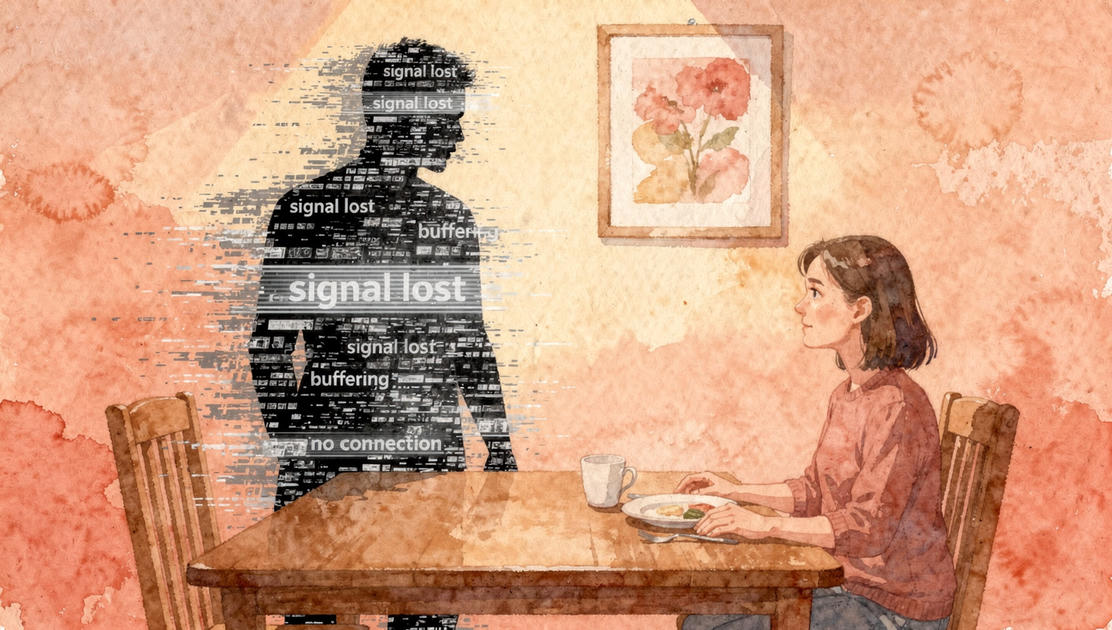
I used to be incredibly well-informed. Every nuance of national and international politics, economics, current events from all angles. I spent serious time learning the details, examining issues from multiple perspectives, getting really well-informed about all of it.
Now my dad asks me about this Greenland thing that's apparently been in the news, and I have no idea what he's talking about. I'd heard the word "Greenland" mentioned somewhere, which is unusual in itself, but that's it. No details. No opinion. Nothing.
People who knew me before find this confusing. They're not necessarily judging me, but they're puzzled. "What do you mean you don't know about XYZ thing that's in the news right now?" And I just shrug. I hadn't heard about it. I didn't know.
Here's what I've come to understand: Our society has become obsessed with global and national concerns that don't actually affect our day-to-day lives, except in the most general and vague sense. Meanwhile, people who focus on their own lives, their children, and the things actually inside their scope of control and influence are treated as somehow morally deficient.
This is backwards. And it's causing real damage.
The Dopamine Loop of Outrage
There's this phenomenon researchers call "analysis paralysis," where information overload makes it almost impossible to act. But it's worse than paralysis. It's active demoralization.
Pick whichever giant problem you want: ecological, political, economic. The 24-hour news cycle and social media deliver a constant flow of crises that people really don't have much control over. And this creates a fear-based tribal mentality where people stop just treating people right.
The mechanism is straightforward. You consume information, your worldview gets reinforced, and you get a little dopamine hit. Learn something new that confirms what you already believed, feel good. Repeat. It's a loop.
What does it feel like when you're in the middle of it? Little drip doses of feel-good confirmation. The thinking part of your mind somewhat disengages. Then all of a sudden it re-engages and you look at the clock and an hour has passed. You feel shame. You realize you just wasted this time. And you don't really have any idea what you've been consuming. It's all kind of a blur.
I still catch myself doom-scrolling sometimes. Not on social media with an account, just whatever's on the front page of some site, absorbing the latest trends. It's the same basic pattern as political news consumption, just with different content. Same dopamine loop. Same waste of time and attention.
When Being "Informed" Made Me Insufferable
For a long time I was on the libertarian, voluntarist, anarchist axis of political thought. This meant that getting drawn into any political conversation with anyone put me in a position of arguing with them, always with this sense of moral superiority. Because from where I stood, everyone I talked to wanted to use violence to control people, just with different flavors and justifications.
What I really loved to do back then was attack the left from the left and attack the right from the right. Show how even on their own terms they were being hypocritical. I thought I was being clever. I thought I was exposing something important.
It didn't win many friends. It didn't make people comfortable. And from the outside, looking at both sides, I could see them making caricatures of each other's ideas. People really self-segregating into their own political and socioeconomic viewpoints. But I wasn't any better. I was just a third flavor of the same tribalism.
The real damage happens when you start making negative decisions in your day-to-day life. Treating people poorly whose only crime is that they think differently than you do about big national and global issues that neither one of you really controls. That's where I was. And that's where most politically engaged people end up.
The Mimetic Trap
The change didn't happen all at once. There wasn't one day when everything clicked. Slowly but surely, over maybe eight or ten years of getting serious about my faith, God has been working on me.
What shifted was recognizing that almost always, you're not really engaging with a person on a personal level. You're engaging with their training, this spirit that has settled upon them as part of their identity.
René Girard's mimetic theory explains what's happening here. People stop being themselves and become conduits for the desires and outrages of their chosen tribe. The opinions they hold, the enemies they hate, the causes they champion: none of it originates with them. They caught it. Like a contagion.
This is the "spirit" I'm talking about. Not something mystical and spooky, but something real and observable. Watch two people from opposing political tribes argue. They're not really talking to each other. They're performing for an invisible audience of their respective groups. They're caught in mimetic rivalry, each one's identity defined by opposition to the other.
The 24-hour news cycle and social media accelerate this contagion to inhuman speeds. You absorb the desires and hatreds of millions of strangers. You adopt enemies you've never met based on caricatures you've consumed. And then you treat actual people, real humans standing in front of you, as representatives of those caricatures.
It sounds strange to say it that way, but I really think this is true. Most of the time, you're dealing with someone's programming, not with them.
Breaking the Rivalry
It's uncommon to actually engage with people as people. Not totally rare, but uncommon. And once you start looking for it, you can do it more.
Here's what it looks like in practice. You're at the drive-through window or the check stand. They hit you with "Hey, how are you doing?" or "Did you find everything okay?" They're expecting the normal social ritual. Everything's good, yeah I found everything, here's my card, bye.
Instead, I look right at them. Ask when they're getting off. How their day's been going. Ask something open-ended that you can't answer with one word. Actually engage with the person.
This isn't just being polite. In Girard's framework, it's a deliberate break from mimetic rivalry. You're refusing to see them as a role, a function, a representative of some group. You're seeing them as a person made in God's image. You're stepping outside the whole system of tribal competition and meeting them on human ground.
My daughter, God bless her, is getting really good at this. We practice it everywhere we go. At Walmart, at church, at the co-working space where I work. The hospitality staff, the reception staff, fellow churchgoers. Not just as people filling roles, but as actual humans.
Shakespeare said all the world's a stage, and that's true. But actors are people too.
The Social Landscape We Lost
I'm single right now, and my parents keep telling me to join the church's singles group. I have to explain that there is no such thing anymore. Not really. Not like there used to be.
When I was a kid, my dad participated in this small business networking thing called Tulsa Business Connection or something like that. Just a social organization about networking. There are still some things like that, but my sense is there just aren't as many.
People used to have events all the time. Weekly, monthly gatherings. Groups. You'd go bowling, float the river, whatever. Just have fun together. I remember that world.
The amount of that happening now compared to twenty years ago is massively different. This isn't a passive cultural shift. It's displacement. The frictionless, high-dopamine simulation of global concern has cannibalized the high-effort, low-dopamine reality of physical presence.
Real community is hard. You have to show up. You have to navigate boring logistics and difficult personalities. You have to be present with people who might not share your opinions about everything. There's no algorithm optimizing the experience for your engagement.
The digital alternative offers the feeling of connection and participation without any of that friction. You can feel like you're part of something important, fighting for causes that matter, connected to millions of like-minded people. All from your couch. All without the awkwardness of actual human contact.
But here's what's really happening: the psychic weight of global problems we cannot solve is draining our will to be social. We're spending our emotional energy on distant crises, leaving ourselves too depleted to navigate the nuances of real-world community. The constant flow of information through social media and the 24-hour news cycle is substituting for getting together with people. And people retreat into their own circles. Stay at home. Get completely demoralized about being present in their day-to-day life.
The problems seem huge. Worldwide. And so people stop being the change they want to see in the world personally. They stop treating people right. They stop showing up.
Easy But Not Easy
Recognizing our shared humanity isn't hard in the sense that it's not complex. It's the simplest thing in the world. Just see the person in front of you.
But it's hard in the sense that it means denying the easiest pathway forward. Putting in a little bit of extra effort. Noticing things. It's easier to interact with people on a superficial level to get what you want than to actually engage with them.
We're usually looking for the easiest pathway forward. And doom-scrolling, staying outraged about things halfway across the world that we can't control, feeling superior to people who think differently about national issues: all of that is easier than the hard work of treating the person in front of us like a person.
I'm reading Brothers Karamazov right now as part of trying to refocus. Girard points to it as one of the best literary illustrations of mimetic theory. Dostoevsky understood how desire spreads between people, how we become possessed by forces that feel like our own will but aren't. The novel shows what it looks like when people break free of that possession and what it costs when they don't.
It's also just a way of putting something substantial into my mind instead of short-form scrollable content. Long-form engagement with difficult ideas instead of the blur of trending outrage.
It's a day-to-day struggle. Truly. The pull toward the easy dopamine is strong. But the alternative, being so consumed by problems I can't control that I treat real people poorly, that I become a conduit for tribal hatred instead of a person capable of genuine connection, is worse.
The number one thing I can control is my own behavior and how it affects other people. My own spiritual growth. Trying to be a better person. Treating the people around me better. Caring about them. Caring about things close to home.
That's not moral insufficiency. That's the actual work.