The Certainty Market
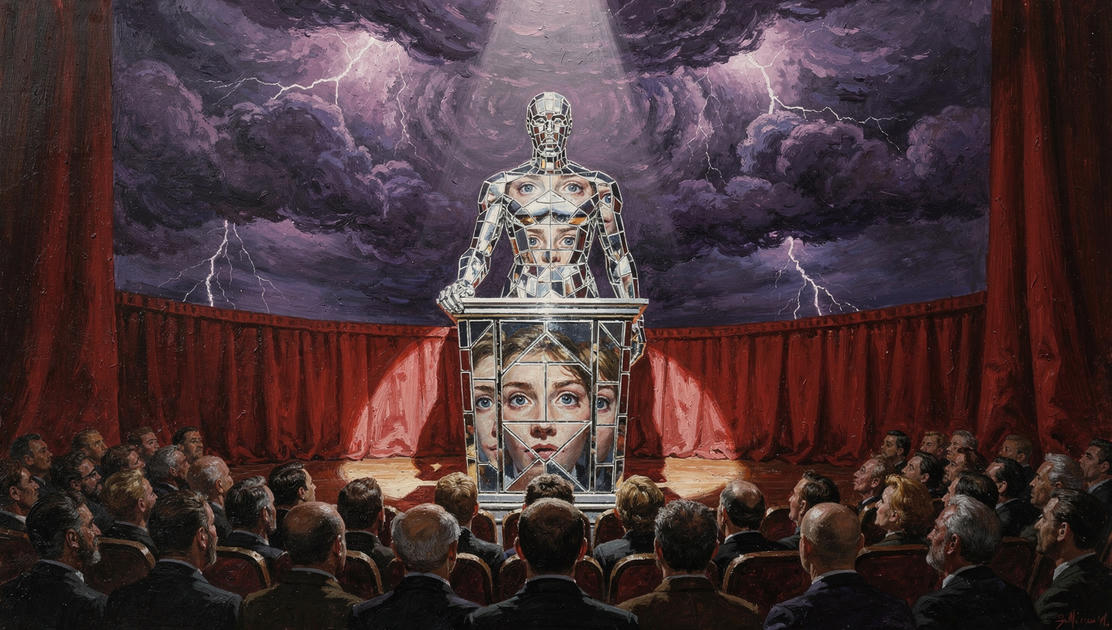
Clients say they want honest assessment. They purchase confident promises.
This isn't hypocrisy. It's revealed preferences exposing what's actually being bought. I've watched this pattern play out enough times to give it a name: the certainty market. And once you see it, you can't unsee it.
What's Actually Being Sold
Confidence isn't just a sales technique. It's the product itself.
When a client hires a consultant or a vendor, they think they're buying expertise, deliverables, outcomes. But underneath that transaction is something more primal: they're purchasing relief from uncertainty. The vendor who projects certainty offers to carry the client's anxiety for them. It's a kind of absolution.
René Girard helps explain why this works. In his framework, desire is mimetic. We don't want things because we've rationally evaluated them. We want what others appear to possess. Desire is borrowed.
When a vendor walks into a room projecting total assurance, they become what Girard calls a mediator. Not a mediator of information, but a mediator of peace. The client, sitting in a state of high-anxiety uncertainty, looks at the certain person and something shifts. They're not just evaluating the proposal. They're imitating the vendor's perceived state of mind. They're thinking, whether they know it or not: I want to feel how they look.
This is why confidence functions as a contagious social signal rather than a logical proof. We don't evaluate certainty rationally. We catch it. The client sees someone who appears unburdened by doubt, and they want that unburdening for themselves.
But here's where Girard's insight turns darker. When a vendor accepts this role, when they allow themselves to become the mediator of peace through false certainty, something else is happening. They are participating in a mutual deception that mirrors idolatry.
The future is contingent. It is God-governed, not consultant-governed. When someone stands up and prophesies exactly how a complex technology project will unfold, they are displacing that reality with a manufactured, human-centric prophecy. They are offering themselves as a false source of the peace that can only come from trusting the actual order of things. The client bows to the idol of expertise, and the vendor accepts the worship.
Both parties know, on some level, that this is a lie. But the transaction is too comfortable to refuse. The client gets relief. The vendor gets the deal. And Truth gets sacrificed on the altar of mutual convenience.
The Current Symptom
The certainty market has always existed. Right now, it has found a new vessel: agentic AI.
The pattern is identical every time. Someone comes in with buzzwords they don't understand, talking about "training" models when what they actually mean is prompting. They want full automation of complex domains. They've been told it's possible.
I tell them what I see: this is more complex than you think. Full automation is probably far-fetched. What you need is augmented research, tools to help your people achieve higher throughput, not an agentic workflow that will magically handle everything.
They don't like this. They've already been sold the vision by someone else. Someone projecting certainty. We don't get those projects.
But here's the thing: I can't frame this as individual failure. The people buying these promises aren't stupid. They're responding to immense external pressure.
Every executive is being told that AI will transform their industry. Every board is asking what the AI strategy is. Every competitor is announcing some initiative. The organizational anxiety is enormous. And into that anxiety walks a vendor offering borrowed peace. A confident voice saying: we have the answers. We know exactly how this will go. You can stop worrying now.
That's not a personal lapse in judgment. That's a rational response to an irrational amount of pressure. The certainty market exists because the weight of not knowing feels unbearable, and anyone offering to carry that weight becomes almost irresistible.
The agentic AI hype cycle is the certainty market in miniature. Same dynamic. Same absolution promise. The prophecies that coding will be solved in six months, that AGI is around the corner, that fully autonomous cars are coming next year for the seventh year running. Someone projects absolute certainty about an uncertain future, and anxious buyers line up to borrow their peace.
This is why rational people buy irrational promises. The promise isn't really about the technology. It's about the relief.
The Refusal
I wish I could say this is easy. It isn't.
Here's the confession: my ego craves the status of the Expert Who Knows. Every time I walk into a pitch, there's a voice in my head that wants to play the mediator. Wants to project the certainty. Wants to see their anxiety dissolve as they look at me and think: this guy has the answers.
That voice is my pride. And it is constantly at war with my commitment to Truth.
Four or five years ago, I gave in to that voice all the time. I heard a problem and knew the answer right away. Here's definitely how we solve it. A close friend, someone I work with, had to tell me: you're not struggling with the technical side of things, but you're really struggling with the people side. People react better when there's some humility.
He was right. And as I've grown, I've come to see this differently. Acting with Christ-like humility isn't just a better sales technique. It's a refusal to participate in idolatry.
When I project certainty I don't have, I am offering myself as a false mediator. I am accepting worship that doesn't belong to me. I am displacing the reality of a contingent, God-governed future with my own manufactured prophecy. And that feels like choosing Mammon over Truth.
So every pitch becomes an internal battle. The fear is real: am I going to get this deal? The temptation is real: just tell them what they want to hear. The ego is real: you could be the Expert Who Knows right now, and they would love you for it.
And then there's the other voice. The one that demands vulnerability. The one that says: you don't know. Say it. Say "I don't know" and watch them compare you to someone who claims they do.
That voice wins. But it's a fight every time.
This isn't a business strategy. It's a spiritual discipline. And some days I lose.
The Alternative Transaction
There's another transaction available. Accompaniment instead of absolution.
Walking through uncertainty together with clear eyes. This isn't a worse version of the same product. It's a different offering entirely. Most RFPs pit these against each other as if they're comparable.
I had this conversation with a client who'd tried to go internal on a project. They'd engaged with us early, we delivered, they decided they could take it from there. A year passed. They couldn't execute. When we started talking again, they were primed for something different.
I told them: I don't know all the answers. But you know that I can deliver. That's what I'm good at. I can walk with you and figure these things out together. We can have confidence that we're going to end up in the best position we can end up in.
And we already know that trying to walk through this on your own, being certain you could figure it out, didn't work. You weren't able to execute.
It's been good working that way. I work well when I can be upfront with people. Here's what we don't know. Here's what we're doing to figure it out.
Process Certainty
Think about it like hiring a guide through the Amazon jungle or up Mount Everest.
The guide has been up this mountain before. They've navigated the jungle, maybe to the same place you're trying to go. But if they told you "we're going to walk a mile in, then see a tiger, then fight the tiger, then go north by northwest for ten miles and encounter X, Y, Z," you'd know that was ridiculous. No one would accept that a guide knows exactly what's going to happen once you get into the jungle.
They have an idea. They've been there before. They can tell you what to bring, what to watch for, how to handle problems when they arise. But certainty about exactly where every step will fall? Absurd.
And yet that's exactly what consultants and AI vendors are selling. Outcome certainty. A detailed map of terrain no one has walked.
What I offer instead is process certainty.
The terrain of the outcome is inherently unknown. No one can tell you exactly what problems you'll encounter, what pivots you'll need to make, what the jungle will throw at you. But the integrity of the methodology is absolute. I've been up this mountain before. I know how to navigate. I know how to research, how to solve problems, how to figure things out as well as they can possibly be figured out.
I reserve the right to pivot as I figure out new information. That's not a weakness in the offering. That's the honest position. That's what process certainty means: you can trust the method even when you can't predict the path.
This is the vocabulary for the different game. Not "I know less than the other guy." But "I'm offering you something the other guy can't: a guide who won't lie to you about what's ahead."
When They Come Back
I've watched clients get drawn into the certainty market and struggle. Not because they made bad decisions. Because the systemic pressure to buy certainty is enormous.
When you're a CEO and the board is asking about AI strategy, and a vendor walks in promising transformation, and your competitors are all announcing initiatives, the weight of that moment is immense. The borrowed peace of a confident vendor becomes a shield against organizational anxiety. Taking that shield isn't a character flaw. It's a response to a system that punishes uncertainty.
So when the pilot phase drags on for nine months with no real data, when the hype slowly deflates, when the wrapper around frontier models turns out to be exactly that and nothing more, I don't approach it as vindication.
When they come to you, they already know. That's why they're coming. You can approach it with grace. Meet them where they're at.
Taking the metaphor as far as it goes: you get lost in the jungle because the system told you to trust someone who claimed to know exactly where he was going. Now you're lost. That's all right. We'll find you and we'll get going. We don't have to talk about how we got there. We just start walking toward the objective.
This is what accompaniment looks like. It's a commitment to Truth. It's choosing to tell people what they need to hear even when what they want to hear would be easier to sell. And it's recognizing that everyone in the system is under pressure, not just you.
Playing a Different Game
You're not secretly winning by playing the long game. You're playing a different game.
The certainty market is real. It's powerful. Opting out has costs. Deals you don't get. Revenue left on the table. The fear that comes with every pitch where you hold the line instead of telling them what they want to hear.
But it's the only game some of us can play honestly.
The mimetic pull of certainty is strong. Clients look at the confident vendor and want to feel how they look. They want the borrowed peace. The absolution. And I can't offer that. Not without participating in the idolatry. Not without becoming a false mediator. Not without sacrificing Truth for the deal.
What I can offer is process certainty. I've been up this mountain before. I can guide you. The methodology is sound. I'm certain I can figure things out as well as they can possibly be figured out.
But I can't tell you exactly what we'll find when we get into the jungle. No one can. And anyone who says otherwise is selling something other than expertise.
They're selling relief. Absolution. The comforting lie. They're offering themselves as mediators of a peace they cannot provide, prophets of a future they cannot know.
Some of us just can't do that. Not because we're better. Because we've seen what it costs. Because the internal battle is real, and we've chosen which voice to listen to.
It's not a strategy. It's a vocation.