Origins
Family Foundation
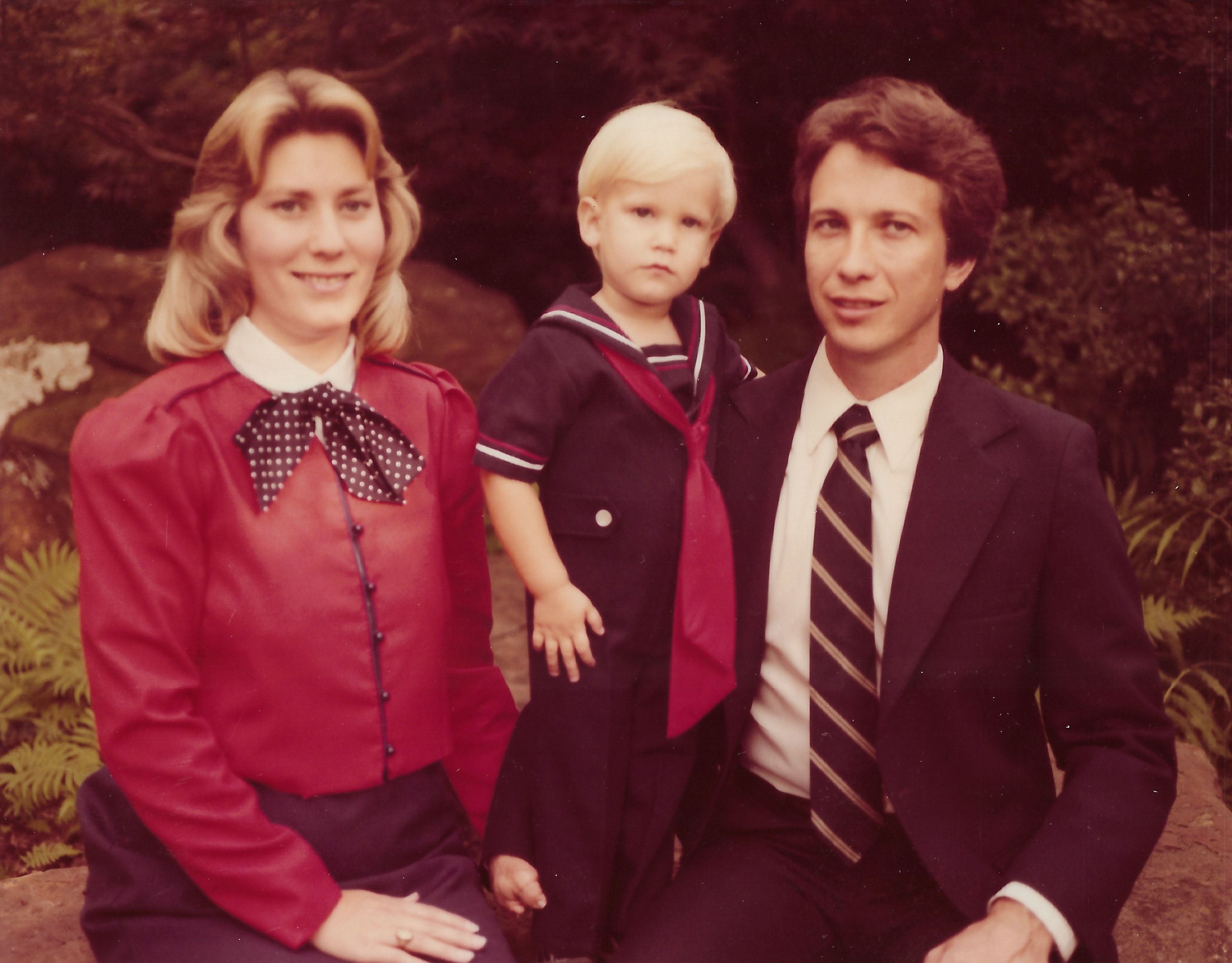
I was born on April 28, 1982, at St. Francis Hospital in Tulsa, Oklahoma. My parents were relatively late to having kids compared to their peers, so growing up I was surrounded by adults and older kids but not many friends my own age. The exception was Brandon Delosier, whose mom watched me as a baby. I've known him my entire life, and he's still one of my closest friends.
My family's economic situation followed an arc. We started lower-middle class and moved into upper-middle class as my dad's law practice succeeded and my mom advanced from teaching to becoming a community college instructor and savvy investor. My dad served in the state legislature while building his practice. My mom was intensely focused on raising me, and for the first eight years of my life I was functionally an only child. My brother Andrew came along when I was eight, and we've always been close despite the age gap.
The real formative influences in my early life were my grandparents. All four of them played huge roles, and they couldn't have been more different from each other.
Papa and Nanny (Maternal Grandparents)
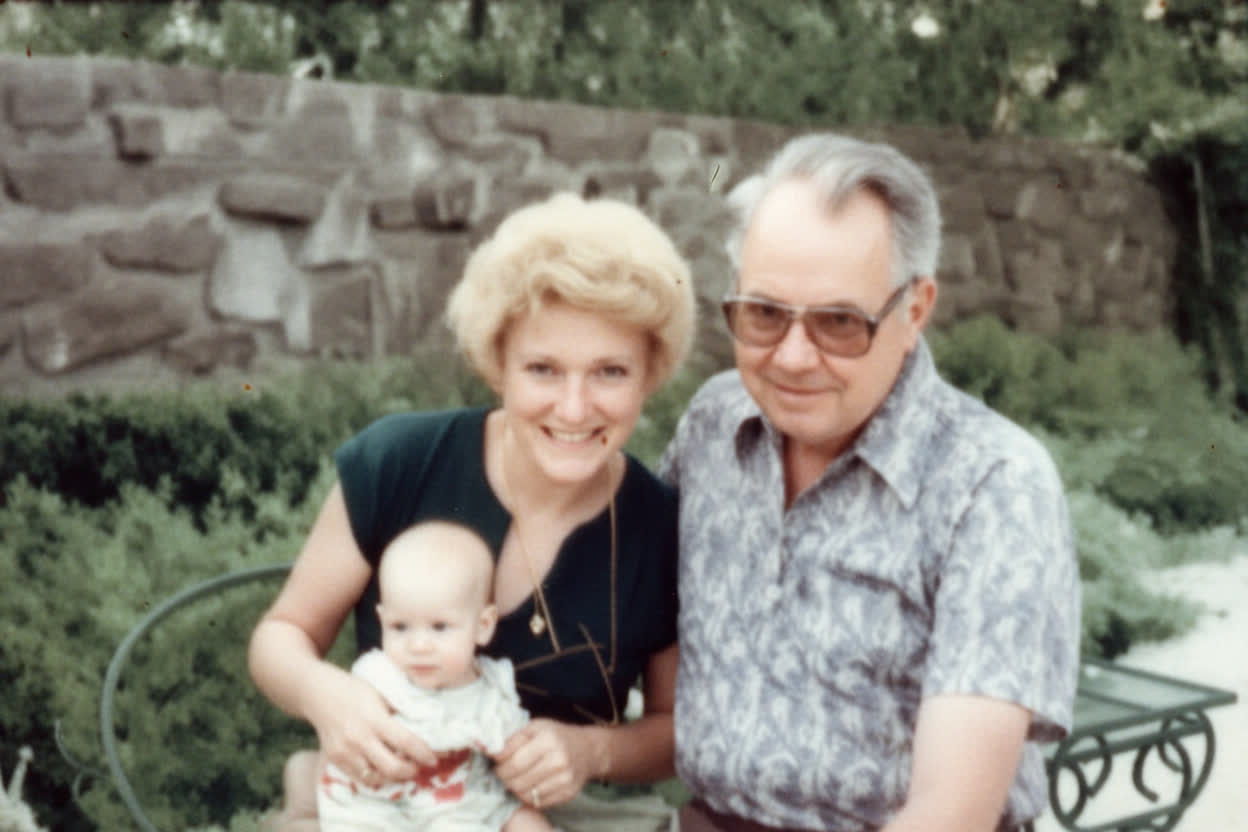
My mom's parents were Jack and Peggy Jo Osborne, though I called them Papa and Nanny. Papa wasn't my biological grandfather. He married my grandmother when my mom was 13, but he was always my grandpa. He was a brilliant mechanical engineer with multiple patents to his name. He founded his own company, led major projects for the city of Tulsa, and designed systems that are still in use today. The trash-to-energy plant in Tulsa? That was his design.
Papa was my role model for intellectual achievement. He showed me what it looked like to be technically excellent, to solve hard problems, to build things that lasted. He was successful and well-off, though I wouldn't say super wealthy. He and Nanny had a winter home in Texas and a lake house where we spent summers. The Fourth of July celebrations at the lake were elaborate productions with games, prizes, competitions, snow cones, hot dogs, and music. Some of my best childhood memories are from that lake house: learning to ski, fishing with Papa at the dam, swimming at the country club.
Nanny (Peggy Jo) was equally impressive in her own way. She was a sharp woman, a great cook, and an incredibly savvy investor. The frugality and financial consciousness I learned came from her. They were the kind of wealthy people who stayed wealthy because they understood the value of money.
Grandpa and Grammy (Paternal Grandparents)
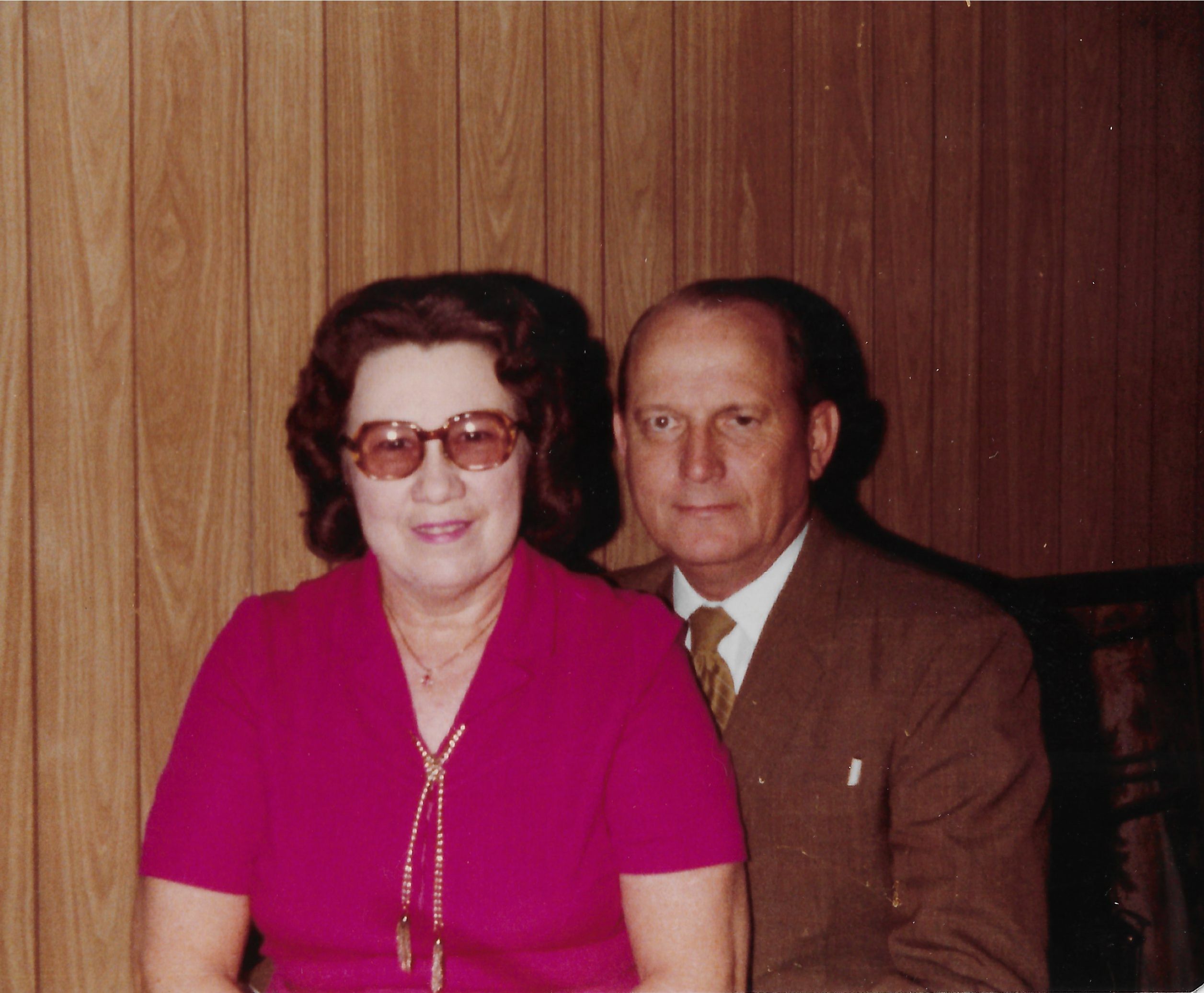
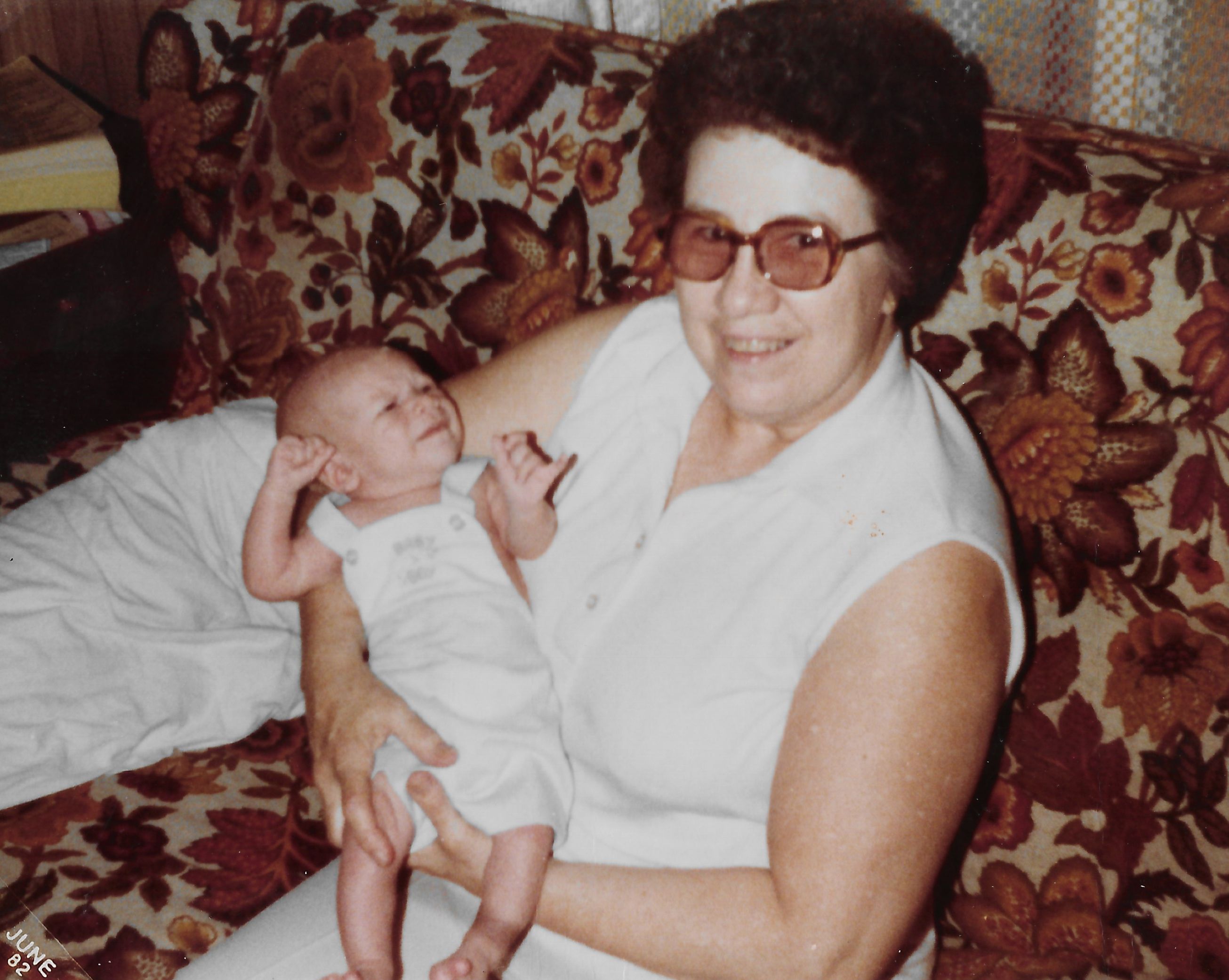
My dad's parents, Dwight and Shirley Williamson, were a different story entirely. They were lower-middle class. Grandpa owned his own business and was the definition of a jack-of-all-trades. He was an entrepreneur who never worked for anybody, always starting new ventures, never super successful but never poor either. He was a character, rough around the edges but incredibly kind.
What I admire most looking back is that they stayed together. Grandpa was not an easy man, and there were plenty of reasons they could have separated. But they didn't. Their commitment to each other through difficulty is something I find remarkable now in ways I couldn't appreciate as a kid.
Grammy was an amazing woman who created a warm home. Both of them showed me a different kind of success: the entrepreneurial spirit, the refusal to work for someone else, the value of building something yourself even if it's not glamorous.
The contrast between my two sets of grandparents taught me something important: there are different ways to live a good life. Technical excellence and business success (Papa), entrepreneurial independence and commitment (Grandpa), domestic wisdom and financial savvy (Nanny), nurturing love and homemaking (Grammy). They all mattered. They were all valid paths.
The Divorce and Its Aftermath
When I was ten years old and my brother Andrew was two, my parents got divorced. It's one of those watershed moments that divides your childhood into before and after. We lived predominantly with our mom after that, with visitation every other weekend and on Tuesdays with our dad.
About a year after the divorce, my dad remarried. From that relationship I have a stepsister, Angie. My dad became very focused on his career and his new wife. The dynamic shifted. My mom poured everything into raising us.
I remember falling asleep in my second-grade class the day I heard they were splitting up. I remember falling asleep in fourth grade around the time my dad was getting remarried. Looking back, those moments of checking out, of not being able to handle what was happening, were early signs of how I'd cope with stress for years to come.
The Gifted Kid Who Couldn't Function
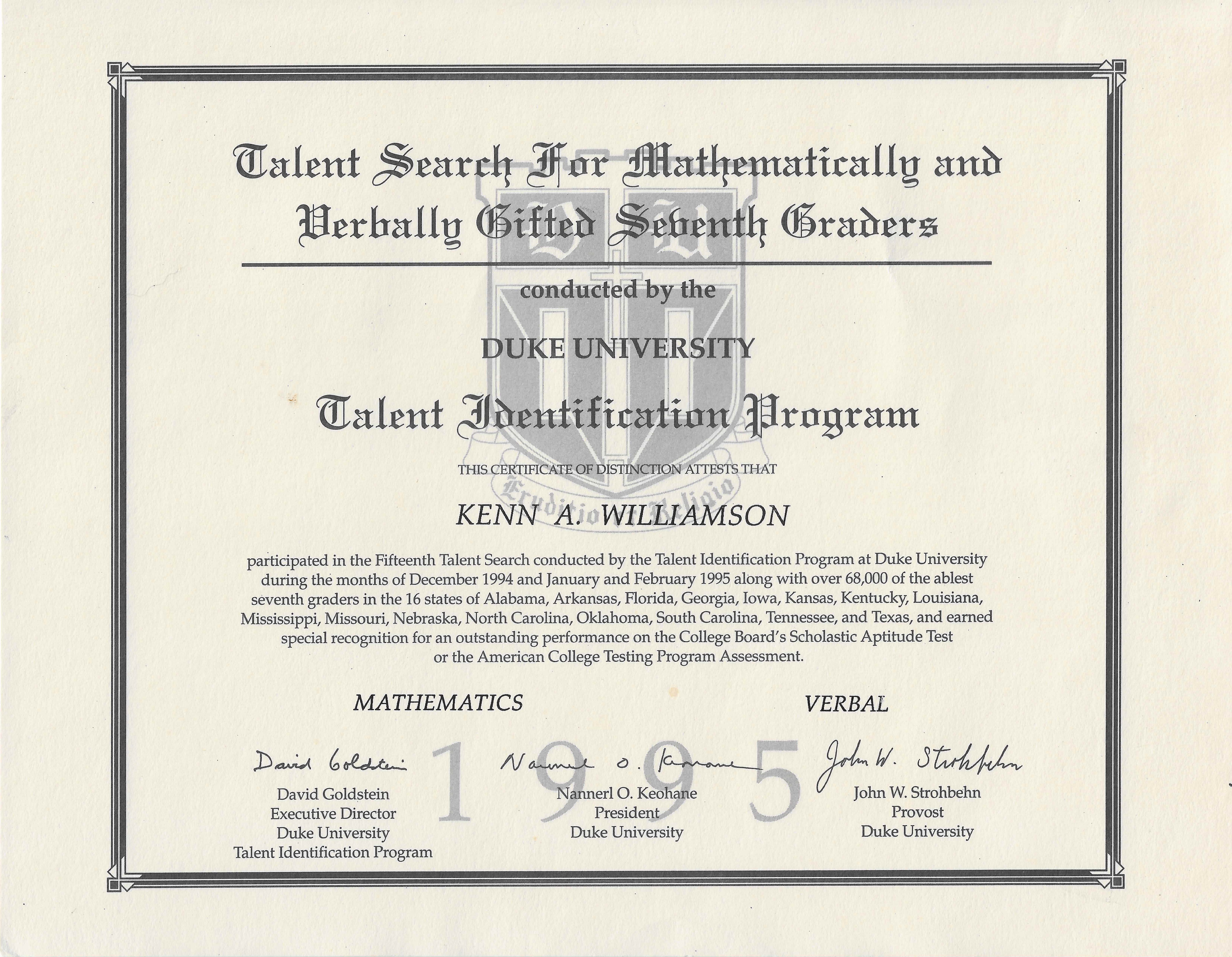
Here's the paradox that defined my entire educational experience: I was genuinely intelligent. High IQ scores, gifted and talented programs, recognition from the
in seventh grade, fourth place in the state for Math Counts in middle school. I found schoolwork easy and boring. But I couldn't turn in homework. I got poor grades. I had behavioral problems.The gap between my potential and my performance was a constant source of frustration for everyone, especially my parents. They knew I was smart. Teachers knew I was smart. I knew I was smart. So why couldn't I do the work?
Looking back now, I can see the factors: childhood trauma from the divorce, emotional immaturity, probable ADD (they diagnosed me with it and tried medications like Ritalin and Adderall, but I didn't like how they made me feel). Looking at neurodivergent perspectives today, I think a more accurate description might be what's called "AuDHD," though I'm resistant to labels in general. They often become crutches people use to excuse behavior rather than explanations for growth. But at the time, it felt like being broken. Like there was something fundamentally wrong with me that I couldn't do what everyone else seemed to do naturally.
The School Circuit
I went to five different schools, and I hated every single one of them to varying degrees.
Montessori School (Pre-K through 1st grade): This was okay. I don't remember much except for Mrs. Swearingen, who my mom liked, and Mrs. Raper, who thought I was a devil child. There was one formative moment involving a cake at a sensory station that taught me about problem-solving: I tried to split it in half but my knife went into a crease, creating a two-thirds/one-third split. The other kid obviously took the bigger piece. It was only later I realized I should have rotated the cake 90 degrees. That's very much how my brain works. I remember the failures and figure out the better solution after the fact.
I left in second grade due to behavioral issues. My dad decided the private school tuition wasn't worth it if I wasn't thriving, so I went to public school.
Darnaby Elementary (2nd through 5th grade, and half of 6th): Public school was terrible. I was bullied heavily. After my parents divorced and my mom went back to work, I became a
The one bright spot was fourth grade with Ms. Bishop. She genuinely loved her students and was passionate about teaching. She understood that I was brilliant but bored, and she worked with me instead of against me. I excelled in her class because she met me where I was.
Metro Christian Academy (6th through 9th grade): I attended Metro Christian from sixth through ninth grade. The bullying continued, though I eventually found a few good friends. My best friend from that period was Corry Kemendo, who I met in middle school.
This was the era of maximum frustration with the potential-performance gap. I was in gifted programs, had high test scores, but consistently got poor grades and had behavioral problems. The work was easy, I wouldn't turn in assignments. My parents' patience wore thin. When my grades didn't reflect what they thought I was capable of, my dad decided to stop helping my mom pay the tuition.
But there were good teachers at Metro. I had two fantastic math teachers, Mrs. Staton and Mrs. Passmore, who nurtured my talent and pushed me with the right mix of empathy and tough love. There was a Bible teacher who was genuinely empathetic. These relationships mattered, even if the overall experience was difficult.
Union Public Schools (10th and 11th grade): I returned to public school at Union for my sophomore and junior years. My struggles intensified. Academically, I was getting C's, D's, and F's with maybe a couple of B's. I had been advanced enough to take Algebra II and Geometry simultaneously in ninth grade, but I completely failed Trigonometry in tenth grade and gave up on math in eleventh grade.
I tried varsity soccer in ninth grade at Metro but quit after my freshman year. After school, I wanted to decompress, not be serious about a sport where our team was terrible anyway. What I did enjoy was drama at Union. I performed in a play based on "The Lottery," and that experience stuck with me.
The combination of poor academic performance, ongoing behavioral issues, and falling in with the wrong friends led my parents to make a drastic decision for my senior year.
Military School: The Crucible
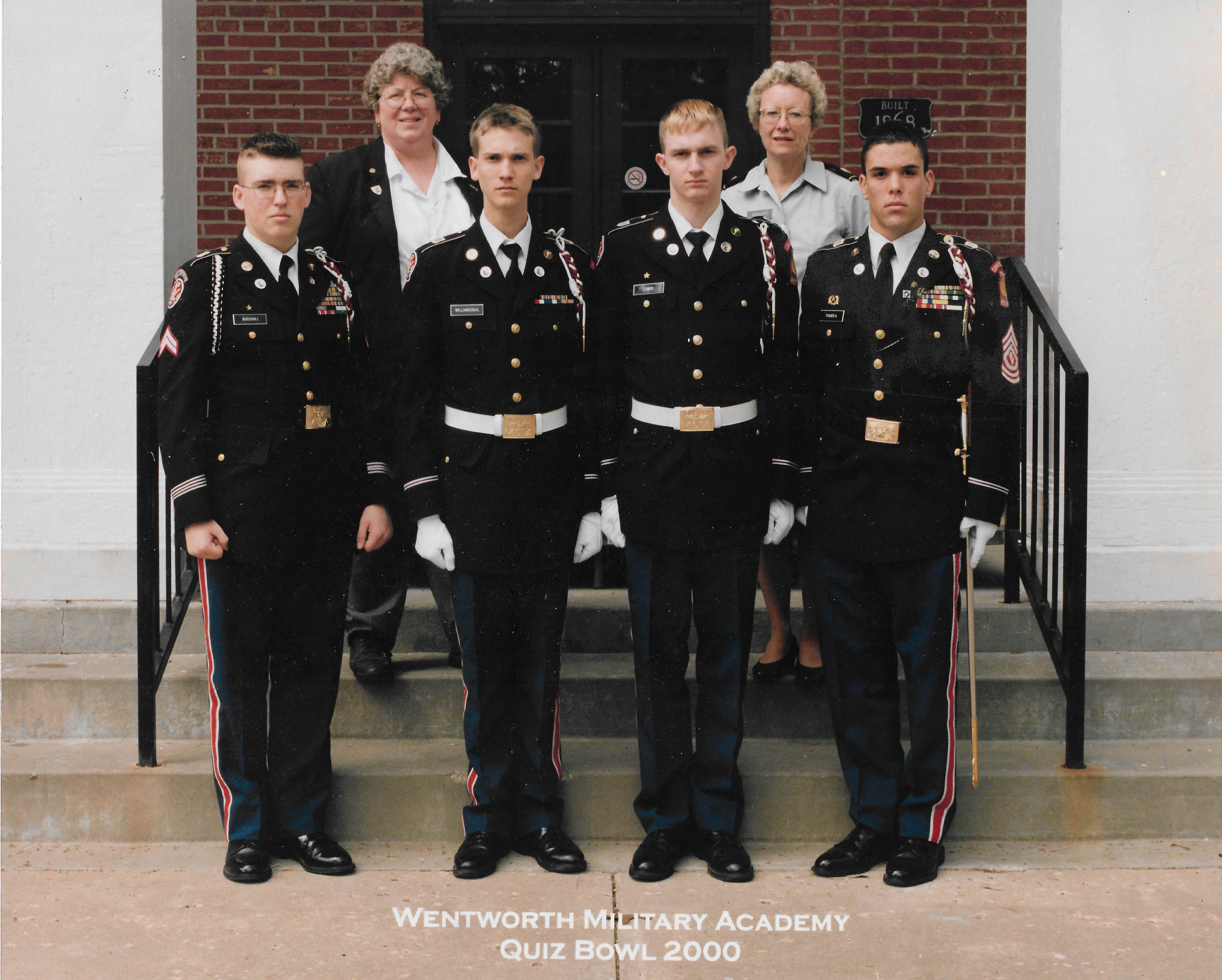
My parents sent me to Wentworth Military Academy for my senior year. It was a last-ditch intervention, and it worked in the narrowest possible sense: I got straight A's for the entire year.
In that extremely rigid, structured environment with no distractions and constant pressure, my academic performance completely transformed. Once I was forced into it with no escape, I excelled. This proved what everyone had suspected: I was capable, I needed the right (or wrong, depending on how you look at it) kind of pressure.
But the experience itself was traumatic. I learned a couple of valuable lessons, like when to shut your mouth and follow orders. But I also learned wrong lessons that took years to unlearn. The cost of that year of straight A's was high.
I was involved in several activities: drama (performed in a short, fun one-act play), chess club, quiz bowl where we made it to the conference championship, and varsity football where I earned a letter mostly because they needed seniors on the team, not because of any particular athletic skill on my part.
The year transformed me socially in ways that both helped and hurt. I had to be "on" 24/7 for basically a year straight. That forced social competence made me much better at being personable and saying the right thing at the right time. When I got to college, I could make friends more easily. But it also taught me to perform rather than to be authentic, and that's taken years to unlearn.
Early Memories and Formation
When I try to think back to my earliest memories, they come in fragments rather than a cohesive narrative. I can distinguish between what I actually remember and what I "know" from stories people told me.
I remember being on a playground in the wind, wearing a yellow shirt. I remember summer camp at YMCA Camp Westside, back before helicopter parenting ruined everything. We did amazing stuff supervised by teenagers: canoeing, exploring woods, archery, crafts. The pool there was unusually deep, and we'd pull up the heavy metal cover for the suction vent and let it drag us to the bottom for fun. Try that today.
I remember trips to my grandparents' winter home in Texas, eating at the Ranchero Room in their golf course community, watching my grandpa eat serrano peppers on butter crackers and insisting I try one. I remember a trip to Mexico with my grandmother, shopping at open-air street vendors right on the border, looking for deals on tourist stuff.
The lake house memories are the best ones. Being on the boat, learning to ski, fishing with Papa, those elaborate Fourth of July celebrations. These were the good times, the times when things felt stable and happy.
The Role Models I Chose
My childhood role models were, without a doubt, all four of my grandparents. As for heroes, I tended to gravitate more toward figures in stories than in sports.
I wasn't a huge sports fan, but one hero I did have was Babe Ruth. I was always drawn to his story as a flawed but cool character. I especially admired his "swing for the fences" approach to hitting home runs, a mentality I wish I could capture more often, as I tend to be more of a "get the base hit" kind of person.
Mostly, though, my heroes came from stories. I was a pretty big nerd and loved cartoons like Transformers. In my early childhood, I gravitated toward the classic, idealistic heroes: the big, good characters who were sacrificing, wise, and empathetic. I was drawn to figures who personified goodness.
On the other hand, I was a huge fan of Scooby-Doo and Shaggy. I loved their cowardly way of always managing to catch the bad guy, and of course, their constant hunger for Scooby Snacks and sandwiches.
When I was very young, I wanted to be a cowboy or sheriff. I had cap guns and dual holsters at my grandpa's house and spent hours practicing my quick draw. My fantasy was less traditional "cowboys and Indians" and more of a steampunk technological cowboy. I also wanted to be a scientist, inspired by Einstein but also very much by Egon Spengler from Ghostbusters.
Looking back, the pattern is clear: I was drawn to people who understood how things worked, who were competent and smart, but also to characters who were flawed or cowardly yet still managed to do the right thing in the end. That tension between capability and struggle has been the story of my life.
But the foundation my grandparents and schools built (however imperfect) would be tested in ways I never imagined.