Theology & Practice

This section explains the theological framework that emerged from my reading journey. If you're here from the Finding Faith section, you know how I arrived at these ideas. Now let me explain what they actually are and why they matter.
The Foundation: What I Learned from the Church Fathers
After reading through the Bible in one year, I worked systematically through several Church Fathers. Each one contributed something essential to my understanding.
Saint Athanasius ℹ: Theosis
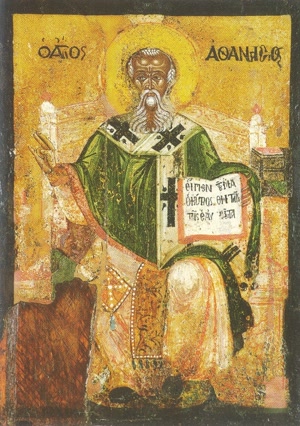 Athanasius, particularly in On the Incarnation, introduced me to the concept of
Saint Gregory of Nyssa ℹ: Universal Reconciliation
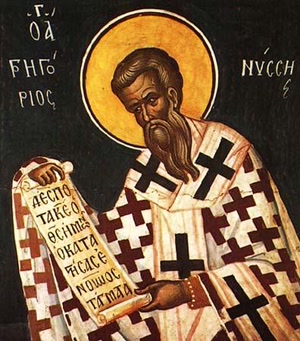 Gregory's understanding of universal reconciliation and the transformation of desire resonated deeply. He saw salvation as healing and restoration, not escape from punishment. Sin is primarily about disordered desires that lead us away from what's actually good for us, not about breaking rules. Salvation is God reordering those desires, healing us into wholeness.
Saint Ephrem the Syrian ℹ: Symbolic Reading
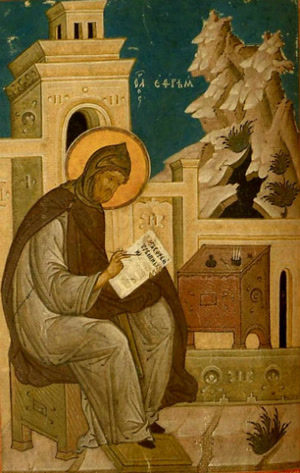 Ephrem brought a poetic, symbolic approach to theology. He understood that biblical language works through imagery and types, not just propositional statements. Scripture reveals truth through patterns, metaphors, and recurring symbols. You can't just extract doctrines like mining data. You have to see how the whole thing fits together as a coherent vision.
Saint Maximus the Confessor ℹ: Cosmic Theology
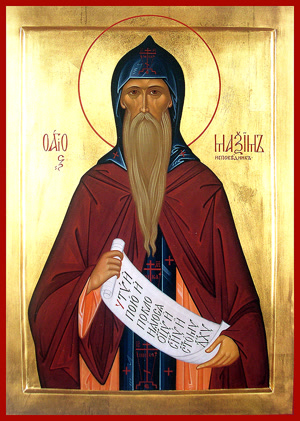 Maximus completed this foundation with his cosmic theology. Christ doesn't just save individual souls; He recapitulates all of creation, bringing everything back into right relationship with God. The Incarnation has cosmic implications. God isn't extracting believers from a doomed world. He's redeeming the world itself.
These Fathers showed me that early Christianity had a much richer, more holistic understanding of salvation than I'd been taught. They were working with categories that made sense of things I'd been struggling with.
Discovering René Girard: The Framework That Connected Everything
After the Church Fathers, I encountered René Girard's work, and suddenly everything clicked into place. Girard didn't give me my understanding. He gave me the language and systematic framework for what I'd already been discovering through Scripture and the Fathers.
I worked through Girard's books in this order:
- - Introduction to mimetic theory and the scapegoat mechanismI See Satan Fall Like Lightningℹ
- - How this pattern runs through history and cultureThe Scapegoatℹ
- - Full theological implicationsThings Hidden Since the Foundation of the Worldℹ
- (currently reading) - Anthropological foundationsViolence and the Sacredℹ
What Is Mimetic Theory?
The core insight: Human desire is imitative (mimetic). We don't want things because they're inherently desirable to us. We want things because we see other people wanting them.
A man sees his neighbor with a beautiful watch, suddenly he wants that watch. A child ignores a toy until another child picks it up, then suddenly it's the most important toy in the world. We learn what to desire by copying the desires of people around us.
This leads to rivalry. If we're all imitating each other's desires, we end up wanting the same things, which means we end up competing for the same things. Competition breeds conflict.
The scapegoat mechanism: When mimetic rivalry threatens to tear a community apart in all-against-all violence, societies have historically resolved the crisis through
This mechanism, repeated throughout human history, becomes ritualized as sacrifice. Ancient religions are built on this pattern: restore peace through the sacrifice of a victim. It works, temporarily, but it's based on a lie. The victim is innocent, chosen arbitrarily, but treated as if they're guilty and deserving of violence.
The revelation: The Judeo-Christian scriptures, and especially the Gospels, expose this mechanism. Unlike every other ancient text that tells the story from the perspective of the mob, the Bible tells it from the perspective of the victim.
The Non-Sacrificial Reading of the Gospel
This is the key insight that changed everything for me.
Traditional Christian theology often presents Jesus's death as a sacrifice demanded by God to satisfy divine justice. God's holy and just nature requires that sin be dealt with. His righteousness demands satisfaction, and only Christ's substitutionary death can satisfy the demands of divine justice, allowing God to be both just and the justifier of believers. This is called
The
Jesus dies because humans, caught in mimetic rivalry and scapegoating, always kill the innocent and call it justice, not because God needs blood to forgive. But there's a crucial difference from all other scapegoats in history: Jesus voluntarily enters this pattern to break it from within, and the resurrection vindicates him, preventing the mob's version of events from standing unchallenged.
The Passion reveals the innocence of the victim and the guilt of the mob. Jesus's words from the cross, "Father, forgive them, for they know not what they do," are the key: they don't know. They think they're doing the right thing. That's how scapegoating always works.
God isn't demanding the sacrifice; God is its victim, revealing once and for all that this mechanism is built on a lie. And once revealed, the mechanism loses its power. Humanity can no longer scapegoat with unconscious innocence.
Why This Matters
This reading resolves many apparent contradictions in Scripture:
- Why does the Old Testament seem to show a violent God, while Jesus preaches love and forgiveness?
- How can God be love if He demands blood payment?
- Why does Jesus explicitly reject sacrifice and say "I desire mercy, not sacrifice" (Hosea 6:6, Matthew 9:13)?
The non-sacrificial reading says: God has always been non-violent and loving. What's changing through Scripture is human understanding of God, not God Himself. We're slowly learning to see God as He actually is, rather than projecting our own violence onto Him.
Christian Voluntarism: What It Actually Means
This is where people start thinking I'm crazy, but bear with me.
I describe myself as a Christian Voluntarist. That sounds abstract, but it's simply taking Jesus seriously when He says to turn the other cheek and love your enemies, and applying this to all human relationships.
Christian Voluntarism means I believe all human relationships should be voluntary: no coercion in politics, economics, or faith. It means refusing to use violence, even state-sanctioned violence, to impose your will on others. It means focusing on the plank in your own eye instead of the speck in your brother's eye. It means recognizing that most of human history has been about people using violence (directly or through institutions) to control others, and that Jesus offers a different way.
I'm theologically orthodox (I affirm the creeds and read the Church Fathers), politically libertarian (I accept
This is profoundly different from both the political Right's vision of using state power to enforce Christian values and the political Left's vision of using state power to enforce their values. Both are still operating within the sacrificial logic: unite against a scapegoat, use violence (legal, economic, social) to expel them.
Christian Voluntarism says: stop scapegoating. Stop using violence. Work on yourself. Love people. Trust God. Build communities based on voluntary commitment rather than coercion.
I'm not saying I do this well. I fail at it constantly. But it's what I'm aiming for.
The Problem of Scapegoating in Modern Culture
Once you see the scapegoating mechanism, you can't unsee it. It's everywhere.
In politics, both sides are constantly looking for the enemy to unite against. For the Right, it's immigrants, or socialists, or the woke mob. For the Left, it's racists, or fascists, or the patriarchy. Both sides think they're fighting for justice, but they're perpetuating the cycle of mimetic violence.
In social media, every controversy follows the same pattern. Someone says or does something offensive. The mob forms. Everyone competes to show they're more outraged than the next person. The target is destroyed, sometimes losing their livelihood. We all feel righteous and united. Until the next controversy, when we do it again.
In workplaces, in churches, in families, the pattern repeats. Something goes wrong. Instead of addressing the genuine systemic issues, we find someone to blame. We expel them, literally or socially. Things seem better for a while. Then the underlying problems resurface because we never actually dealt with them.
The non-sacrificial reading says: stop doing this. Stop looking for scapegoats. Stop trying to solve problems through expulsion and violence. Look at the actual issues. Take responsibility for your own part in the problems. Show mercy.
This doesn't mean there are never genuine problems or that we should never confront bad behavior. But it means we need to do it from a place of love rather than a place of wanting to destroy the other person to feel better about ourselves.
How This Works in Practice
All of this theology is meaningless if it doesn't change how I actually live. Here's what it looks like in practice, though I fail at this constantly:
In relationships: When conflict arises, I try to ask myself: Am I looking for someone to blame? Am I trying to unite people against a common enemy? What's my part in this? Instead of pointing out others' flaws, work on my own.
In politics: I don't vote. I don't try to capture state power to enforce my values. I focus on living differently myself and building community with others who want to do the same.
In church: I try to resist the urge to join in when people are gossiping or uniting against someone. I try to speak up for the person being scapegoated, even when it's uncomfortable.
In work: When projects fail or problems arise, I try to look at systemic issues rather than blaming individuals. I try to create environments where people can grow rather than environments of fear and judgment.
With myself: This is the hardest. I'm incredibly critical of myself, and I'm working on extending the same grace to myself that I try to show others.
The fruits of the Spirit (love, joy, peace, patience, kindness, goodness, faithfulness, gentleness, self-control) are what I'm aiming for. I struggle with all of them. But the framework gives me a way to understand why I struggle and what transformation actually looks like.
This theological framework shapes everything, including how I approach my work and professional calling.