Blog
Thoughts on Christian Voluntarism, technology, and personal growth

Framing Freedom
Gartner predicts 40% of agentic AI projects will be canceled by 2027, not because the tech failed, but because organizations deployed without orientation. Meanwhile, "full autonomy" approaches produce security vulnerabilities and mimetic frenzy. These look like opposite problems, but they share the same root failure: neither understands that constraint is what gives agency its shape.

Nothing New Under the Sun
My friend builds AI agents that ship code autonomously: 150 PRs merged while you sleep. His system caches every solved problem as a reusable "skill." When I asked about cache invalidation, he admitted there's no mechanism for it yet. That admission has been rattling around in my head ever since. Because the skill knows *what* but not *why*. And when context shifts, confident wrong output has no way to feel the dissonance.

Green Eyes and the Algorithm
I spent hours researching a topic. Someone else made bold claims with zero evidence. They won. That's when I felt it: the tight, hot sensation I know too well. René Girard called it mimetic rivalry; we become "monstrous doubles" of the people we envy. The more I obsessed over why his post outperformed mine, the more I risked becoming exactly what I was criticizing. Then I remembered the mountain I climbed last August, where no algorithm decided if my effort was worth amplifying.

The Clean Slate and Its Costs
The rewrite always feels righteous. You're staring at fifteen years of decisions made by people long gone, solving problems that no longer exist. "What if we just started over?" But that gnarly code isn't just mess: it's accumulated wisdom. Every weird conditional represents a real person who broke a simpler assumption. Before you delete, ask: is this cruft, or is it load-bearing?

Nobody Juggles Alone
The Dyson metaphor says work is rubber balls, family is glass; drop work, it bounces back. Here's the problem: there are no rubber balls. Every promise you break, every moment you miss, something cracks. Three weeks of solo parenting taught me what productivity advice never will: you're not managing priorities alone. You're juggling with people. And the real danger isn't the noise of shattering; it's when they quietly stop throwing.

The Signal in Shadow IT
Shadow IT isn't a threat to contain; it's a diagnostic signal. When employees use personal ChatGPT accounts for sensitive data, they're telling you exactly where your governance is broken. The casual users got scared off by company memos. But the power users handling your most sensitive data? They're still in the shadows because your sanctioned tools can't do what they need. Here's how to read the message before shadow AI becomes shadow agency.

Providence in the Probabilistic: Faith and Non-Deterministic Systems
The Church Fathers understood something about uncertainty that modern enterprises keep getting wrong. They knew outcomes aren't binary (determined or random) but bounded variations within possibility spaces. Now, as organizations struggle to trust AI systems that don't give the same answer twice, that ancient framework offers surprising clarity. The shift from Boolean to Bayesian isn't just technical. It's theological.
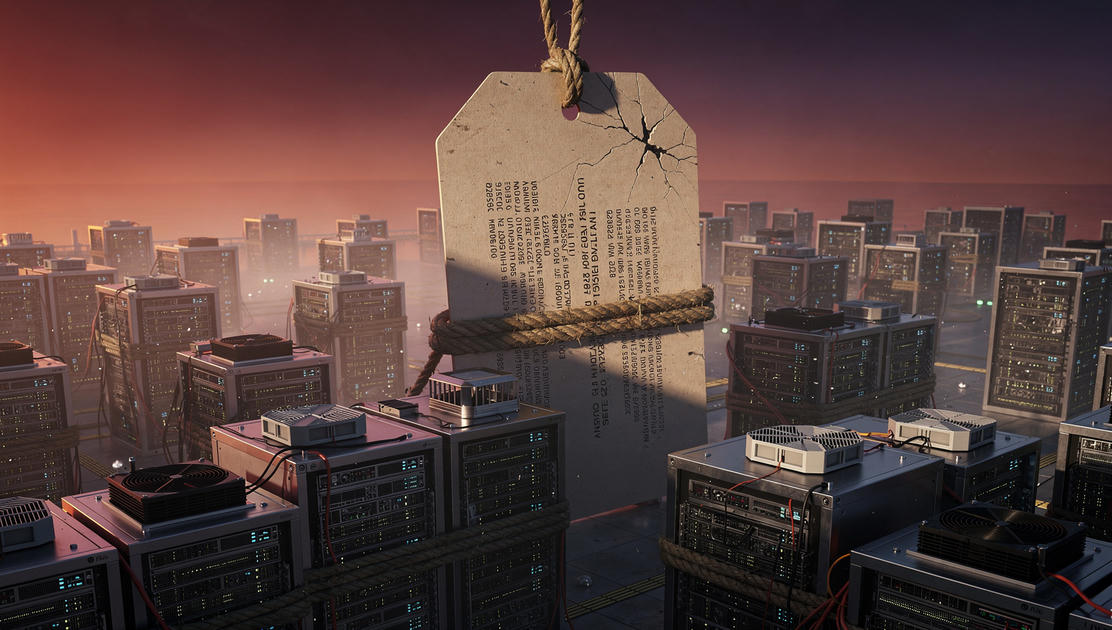
The VMware Diaspora: Lessons from a $61 Billion Arbitrage
Broadcom isn't the villain; they're the debt collector. When they acquired VMware for $61 billion, they simply calculated the gap between old pricing and what customers would pay to avoid migration pain. The result? 300-1,500% price increases and nowhere to run. This isn't a story about corporate greed. It's about how many organizations spent fifteen years building invisible prisons. The question isn't whether Broadcom was wrong. It's did you build your own prison.

I Wish AI Would Get Boring
AI hype promises magic. Reality delivers chaos: unpredictable outputs, failed pilots, and "pilot purgatory" where 95% of projects never show ROI. The dirty secret? Boring AI wins. Like Postgres or S3, the most valuable tech becomes invisible infrastructure. While bubbles inflate on AGI promises, the real competitive advantage belongs to those building narrow, predictable tools that actually ship.

Chatbot Psychosis and the Gnostic Temptation
Late-night conversations with AI about loneliness, existence, and whether my choices have locked me into solitude forever. When I see headlines about "AI psychosis," I can't escape the question: where's the line between their use and mine? The ancient Gnostics promised escape from flesh into pure spirit. Today's AI girlfriends offer the same bargain: connection without incarnation. But what if embodiment isn't the prison? What if it's the whole point?